
HYBRID EVENT: Join us in person in London, UK or attend virtually from anywhere.

4th Edition of

World Orthopedics Conference

September 24-26, 2026 | London, UK

Ortho 2025

Cross-cultural adaptation and validation of the Spanish version of the Early-Onset Scoliosis Self Report Questionnaire (EOSQ-SELF)

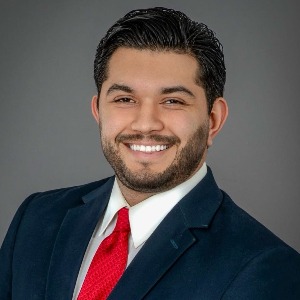
Speaker at World Orthopedics Conference 2025 - Joseph Salem Hernandez
Ponce Health Sciences University - Department of Orthopaedic Surgery, Puerto Rico
Title : Cross-cultural adaptation and validation of the Spanish version of the Early-Onset Scoliosis Self Report Questionnaire (EOSQ-SELF)

Abstract:

Purpose: The Early-Onset Scoliosis Self-Report Questionnaire (EOSQ-SELF) is a self- assessment tool for measuring health-related quality of life (HRQoL) in children with early-onset scoliosis (EOS). It complements the 24-item Early-Onset Scoliosis Questionnaire (EOSQ-24), which relies on proxy reporting. Originally validated in English and Chinese, this study aims to translate, culturally adapt, and validate the EOSQ-SELF for Spanish-speaking Hispanic populations, enhancing its applicability in assessing HRQoL in children with EOS.

Methods: A cross-sectional study was conducted from August to September 2024 with children aged 7 to 14 years diagnosed with EOS, recruited from pediatric orthopedic centers in Puerto Rico. The EOSQ-SELF was translated and culturally adapted using forward-backward translation and expert review. Participants completed the questionnaire twice, with a two-week interval. Reliability was evaluated through internal consistency (Cronbach’s α) and test-retest reliability. Content validity was assessed by an expert panel, while discriminative ability was analyzed using nonparametric tests and regression. (Approved by IRB)

Results: Thirty participants (mean age 11 years, 53.3% female) provided valid responses. The mean Cobb angle was 60.12° ± 18.30°. The Spanish EOSQ-SELF demonstrated excellent internal consistency (Cronbach’s α = 0.937) and effectively distinguished between different scoliosis severities and types.

Conclusions: The Spanish EOSQ-SELF is a reliable and valid tool for assessing self- reported HRQoL in Hispanic children with EOS. It has significant utility in clinical and research settings, broadening the scope of EOS patient-centered care.

Funding: This research did not receive any specific grant from funding agencies in the public, commercial, or not-for-profit sectors.

Biography:

Joseph Salem Hernández is a fourth-year medical student at the University of Puerto Rico School of Medicine, expected to graduate in May 2026, with a strong academic focus in orthopaedic surgery and musculoskeletal research. He will serve as an Incoming Orthopaedic Surgery Research Fellow at the Ponce Health Sciences University, Department of Orthopaedic Surgery, where he will continue advancing his clinical and academic contributions to the field. Of Puerto Rican and Lebanese descent, Joseph brings a diverse and global perspective to orthopaedic research. His work spans a broad range of topics including clinical and imaging-related outcomes in distal radius fractures, surgical management of lateral epicondylitis, nerve transfer techniques in brachial plexus injuries, and cross-cultural validation of orthopaedic outcome measures such as the Early-Onset Scoliosis Self-Report Questionnaire (EOSQ-SELF). He has authored and co-authored multiple peer-reviewed publications in journals such as the Journal of Pediatric Orthopaedics, Journal of Hand Surgery Global Online, Heliyon, and Arthroplasty Today, with ongoing work in upper extremity, spine, and arthroplasty research. His research has been presented extensively at national and international conferences, including the AO Orthopaedic Research Summit (Davos), ICEOS (France), and multiple World Orthopaedic Conferences. Joseph is a recipient of the AO Foundation/ON Foundation Education Grant and the Research Travel Award from the Center for Hispanic Excellence. In addition to his research, he serves as Co-President of the Orthopaedic Surgery Interest Group (OSIG) at UPR, where he leads mentorship, education, and professional development initiatives for students pursuing orthopaedics. With a strong foundation in both clinical research and academic leadership, Joseph is committed to advancing evidence-based orthopaedic care and contributing meaningfully to the academic growth of the field.

Watsapp